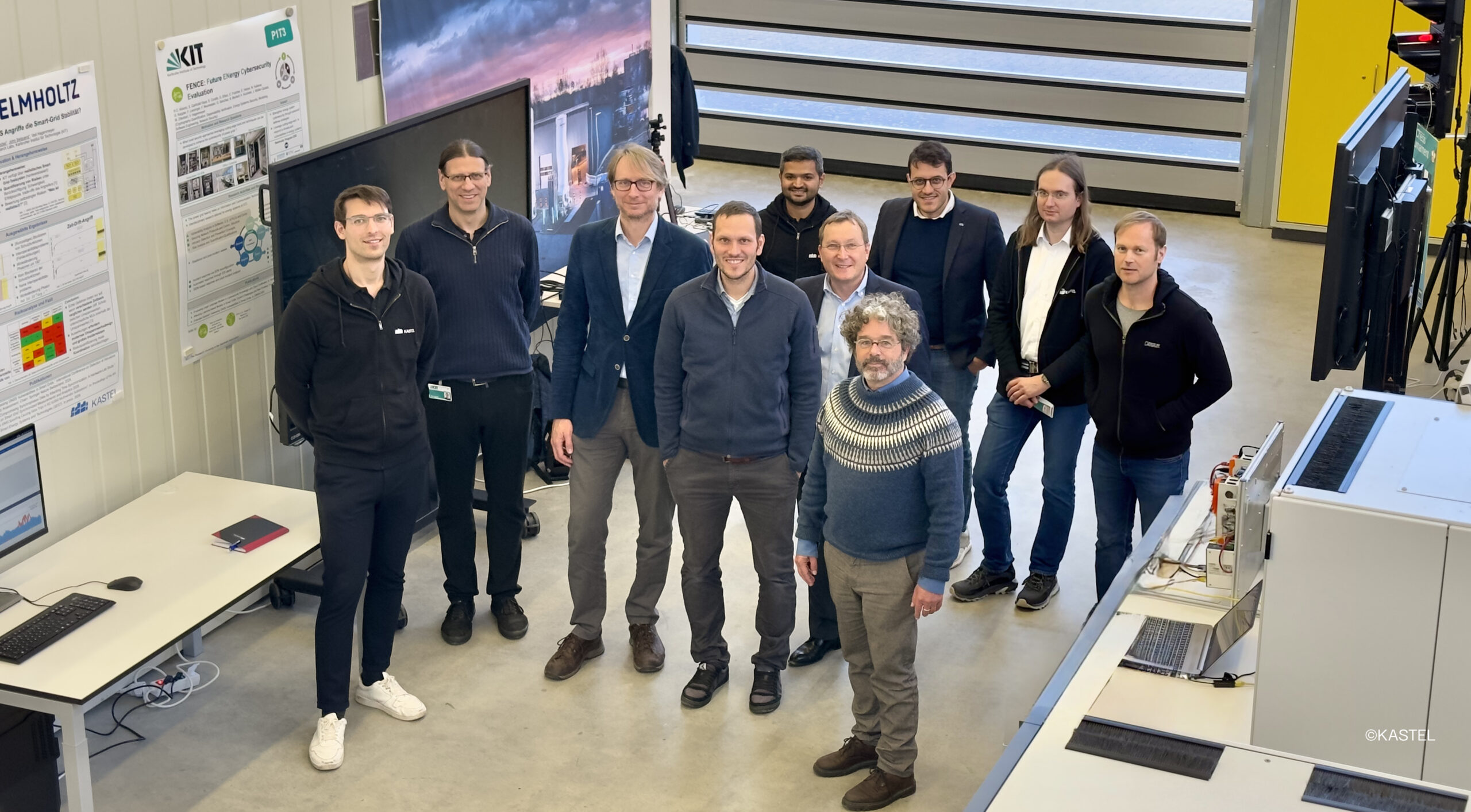
Through several demonstrations covering various application areas, he gained a comprehensive insight into the diverse research being conducted on IT security.
Clemens Fruböse opened with a demonstration of how attackers can use a directional antenna to transmit targeted, spoofed GPS signals in order to manipulate electrical substations and take transformers offline.
Next Jeremias Mechler gave a live demonstration showing how AI calculations can be performed within a cryptographic enclave on the Kaapana platform of the German Cancer Research Center (DKFZ) without providing insight into sensitive medical data.
Using the “Remote Attestation in OPC UA” demonstrator Pascal Birnstill illustrated how industrial systems can be protected against tampered or untrusted devices that interfere with control processes.
Finally, Achyut Hegde presented the “Attacks on Traffic Light Recognition and Countermeasures” demonstrator to show realistic threat scenarios for traffic light recognitions in autonomous vehicles.
The demonstrations impressively illustrated how research at KASTEL Security Research Labs addresses current and future cybersecurity challenges while developing innovative, practical solutions for the secure deployment of digital technologies.